Tuesday, April 9, 2013

WTHA, 2013


"Lone Star Historian" is a blog about the travels and activities of the State Historian of Texas. Bill O'Neal was appointed to a two-year term by Gov. Rick Perry on August 22, 2012, at an impressive ceremony in the State Capitol. Bill is headquartered at Panola College (www.panola.edu) in Carthage, where he has taught since 1970. For more than 20 years Bill conducted the state's first Traveling Texas History class, a three-hour credit course which featured a 2,100-mile itinerary. In 2000 he was awarded a Piper Professorship, and in 2012 he received the Lifetime Achievement Award from the Wild West Historical Association. Bill has published almost 40 books, half about Texas history subjects, and in 2007 he was named Best Living Non-Fiction Writer by True West Magazine.

The 90th Annual Meeting of the West Texas Historical Association was held April 5 and 6 on the beautiful campus of Midwestern State University in Wichita Falls. An enthusiastic crowd exceeding 200 attended, providing large numbers for programs, the WTHA banquet and luncheon, and the display room of booksellers. In between sessions clusters of attendees staged their own lively discussions.

The Friday-Saturday meeting actually began on Thursday, with several activities for early arrivals. More than 20 WTHA members gathered in Henrietta, where the Clay County Historical Commission proudly opened the superb museum they have created in the old county jail, as well as the handsome domed 1884 court house. In the evening there was a large informal gathering at a barbeque restaurant near the Best Western University Inn. 
1890 Clay County Jail/Museum

Friday morning began with two nine o'clock sessions: "Tracking the Nineteenth Century Texas Rangers" and "Buffalo Hunters and West Texas Trails." Experts explored these two exciting topics, and for the next day and a half, highly regarded authors and researchers presented the latest findings on a broad array of West Texas historical topics. Each presentation period was an hour and 15 minutes in length, and there were two or three sessions featuring at least three speakers during each period. Sometimes an attendee would listen to the opening speaker in one session, then scurry to another session in hope of hearing a later speaker. 

Award-winning author
Bill Neal and President
Marisue Potts.
On Friday evening at the downtown Kemp Center for the Arts, a reception was held in honor of President Marisue Potts. A banquet followed, and the featured speaker was the eloquent John Miller Morris, Professor of Geography at the University of Texas at San Antonio. 

The 90th Annual Meeting climaxed at noon on Saturday, with the Awards and Business Lunch. Two new WTHA Fellows were announced, past presidents David Murrah and Darlene Bilinghausen. It was announced that another Fellow, accomplished author Paul Carlson, was not in attendance because on this weekend he was being admitted to the prestigious Texas Institute of Letters. The Rupert Richardson Best Book Award was presented to Pat Dearen for Devil's River, while Clint Chambers received the Ruth Leggett Jones Best Article Award. There were other awards, followed by the election of officers. J.T. Tillapaugh of Odessa College was named the new president (and I was honored to be elected vice president). The final event was a delightful presidential address by lifelong rancher Marisue Potts, "Don't Bring a Mare to the Roundup: The Cowboys' Unwritten Rules." Afterward participants lingered to say goodbyes, and everyone already is looking forward to the 91st Annual Meeting in Odessa. 
All WTHA sessions were held at Midwestern's
Clark Student Center.

In the Exhibitor's Room Ron Chrisman,
Director of the UNT Press, examines a book
while Dr. Harold Weiss looks on. 
Three of the Texas Ranger presenters (L to R):
Michael Collins, Tom Crum, and Donaly Brice.
Large crowd at the Saturday luncheon. 

New President J.T. Tillapaugh


Allen Anderson presents
book award to Pat Dearen 

WTHA Executive Director
Tai Kreidler


Gary Nall with new Fellow David Murrah

Tuesday, April 2, 2013

Salado


"Lone Star Historian" is a blog about the travels and activities of the State Historian of Texas. Bill O'Neal was appointed to a two-year term by Gov. Rick Perry on August 22, 2012, at an impressive ceremony in the State Capitol. Bill is headquartered at Panola College (www.panola.edu) in Carthage, where he has taught since 1970. For more than 20 years Bill conducted the state's first Traveling Texas History class, a three-hour credit course which featured a 2,100-mile itinerary. In 2000 he was awarded a Piper Professorship, and in 2012 he received the Lifetime Achievement Award from the Wild West Historical Association. Bill has published almost 40 books, half about Texas history subjects, and in 2007 he was named Best Living Non-Fiction Writer by True West Magazine.

Recently my wife Karon and I spent the night at the Stagecoach Inn in Salado. For more than a half a century I have had the pleasure of stopping in Salado - to eat at the superb restaurant at the Stagecoach Inn, to overnight at the Inn, to tour students of my Traveling Texas History Course through the historic town, and to shop (actually, to walk to historic sites while my wife shopped). One weekend ago I took another walk around Salado, this time armed with a camera in order to blog about one of the most charming and popular small towns in Texas.

I hiked up the hill to the site of old Salado College, now handsomely stabilized and landscaped. Before Texas A&M became the first publicly-funded college in Texas, more than 50 private - and often denominational - colleges were founded, beginning during the Republic of Texas. There was Rutersville College, San Augustine "University," Galveston University, and Marshall University. Baylor was established at Independence in 1845, and Austin College in Huntsville four years later. Since there were no high schools in Texas, most of these grandly-named colleges and universities taught teenaged students, and subject matter was mostly on the secondary level. But there was a growing demand for education, and private colleges proliferated.
Bell County needed an institution of higher learning, and in October 1859 a tent meeting convened at Salado Springs to pursue the project. Salado Springs, a campsite for Native Americans for centuries, was an attractive location. Since 1852 a stagecoach line between Waco and Austin had used Salado Springs as a stopover, and a post office was opened at Salado in 1852. At the tent meeting the Salado Joint Stock Company was organized, and Col. E.S.C. Robertson - son of area colonizer Sterling C. Robertson - donated 100 acres of land. A two-story stone building was erected in 1860, and by the outbreak of the Civil War 124 students were enrolled. After the war attendance averaged 250 for several years, and in 1871 there was a two-story addition to the building. During 24 years of operation, Salado College was funded solely by tuition.

After Salado was missed by the railroad, the town declined, dropping to a population of 200. In 1885 the building was turned over to the Salado public schools, and eventually the property was abandoned and overgrown - until the reclamation of recent years. Governors James and Miriam A. Ferguson attended Salado College, and so did historian Charles Ramsdell, and Lieutenant Governor Edgar Witt.

Elsewhere around town I photographed commercial buildings, historic homes, and the old Shady Villa Inn, which was transformed in the 1940s by the Dion Van Bibbers family into the Stagecoach Inn, home of a nationally famous restaurant. Salado has been revitalized, and much of the new construction has adhered to the style of pre-existing buildings.

Judge Orville Tyler built this hillside home in 1857.


Future governor James Ferguson roomed at this
boarding house while a student at Salado College.

Built ca. 1870, this home became the residence
of a succession of Salado doctors.


Tuesday, March 26, 2013

A Busy Week


"Lone Star Historian" is a blog about the travels and activities of the State Historian of Texas. Bill O'Neal was appointed to a two-year term by Gov. Rick Perry on August 22, 2012, at an impressive ceremony in the State Capitol. Bill is headquartered at Panola College (www.panola.edu) in Carthage, where he has taught since 1970. For more than 20 years Bill conducted the state's first Traveling Texas History class, a three-hour credit course which featured a 2,100-mile itinerary. In 2000 he was awarded a Piper Professorship, and in 2012 he received the Lifetime Achievement Award from the Wild West Historical Association. Bill has published almost 40 books, half about Texas history subjects, and in 2007 he was named Best Living Non-Fiction Writer by True West Magazine.

I was introduced to the Shelby
County Historical Society by a
former student, Shana Brittain.
Last Tuesday evening I drove to Center to address the Shelby County Historical Society. Monthly meetings are held in the Shelby County Museum, a couple of blocks northeast of the courthouse square. The museum houses a nice collection of artifacts and photos, as well as excellent archival files of county history, individuals and genealogy. I've presented programs to the Society several times through the years, and this time I was asked to speak about "Texas Women." From the 19th century I selected a succession of frontier women, who proved the old adage that "Texas is hell on horses and women." I tried to stress the isolation, hardships, and dangers faced by hardy, courageous women of the Texas frontier. The 20th century women I discussed were Margie Neal, the first woman to serve in the Texas Senate; Governor Miriam A. Ferguson; Colonel Oveta Culp Hobby, who was asked to form the Women's Army Corps ("I never did learn to salute"); and Governor Ann Richards.
Shana Brittain brought several of her Center High School
students to the book signing on the square.

Two days later I returned to Center. Ann Bowen, an officer of the Shelby County Historical Society, owns and manages an antique mall and had advertised a book signing schedule from 10 AM to 1 PM, featuring my two new titles, West Texas Cattle Kingdom and Lampasas, 1855-1895, Biography of a Frontier Texas Town. There was an excellent turnout which included a number of my former students, and the three-hour signing turned into four hours. 


Two days later, on Saturday, my wife Karon and I drove toward Austin, with a stop in Corsicana to see the Easter cycle play which I described in the previous blog. A crowd of more than 300 followed the "cycle" from one church to another, and a large chorus and instrumentalists maintained the mood of the pageant as we moved to different stations. The scenes were carried off with imagination and power, and I learned that on the next day, Palm Sunday, the crowd was even larger.


Bob Bullock Texas State History Museum
My wife and I spent Saturday night at the Stagecoach Inn in historic Salado. I was scheduled to speak at the Bob Bullock Texas State History Museum early Sunday afternoon. We arrived with time to spare. I checked in at the gift shop, which had planned a signing for my most recent book, West Texas Cattle Kingdom. Esther Rivera of the museum staff took me to the Texas Spirit Theater for a sound check with the technicians. As the audience arrived I greeted as many as possible, expressing my appreciation for their attendance. I was delighted to see a former student, Wade Parsons, who had brought his family. My oldest daughter, Lynn Martinez, a teacher in the Mansfield ISD, also was present with her family, husband Rudy and daughters Chloe and Jessie. Lynn had hoped for years to bring her daughters to the Bob Bullock Museum, and I was proud that they were able to coordinate the museum visit with my appearance. I was introduced by the museum director, Joan Marshall, who had invited me to prepare an address on "The Leadership Roles of Sam Houston." I relished this assignment, and the audience seemed quite receptive. There was a brisk book signing afterward, and I was deeply privileged to have been asked to provide an event at the flagship museum of Texas History. 

The following evening I again was in Center to provide a program for the Capt. Jesse Amason Camp, #282, of the Sons of Confederate Veterans. There are 80 camps, or companies, of the Texas Division of the SCV. Three of my great-grandfathers defended their homes - in Georgia, Mississippi, and Alabama - as youthful soldiers of the Confederacy, and they each migrated to Texas after the Civil War. I had met with the Center SCV on past occasions, and it was a pleasant evening for me. As I drove home afterward, I reflected on what a busy and rewarding week it had been, full of State Historian activities, with more around the corner.

Saturday, March 16, 2013

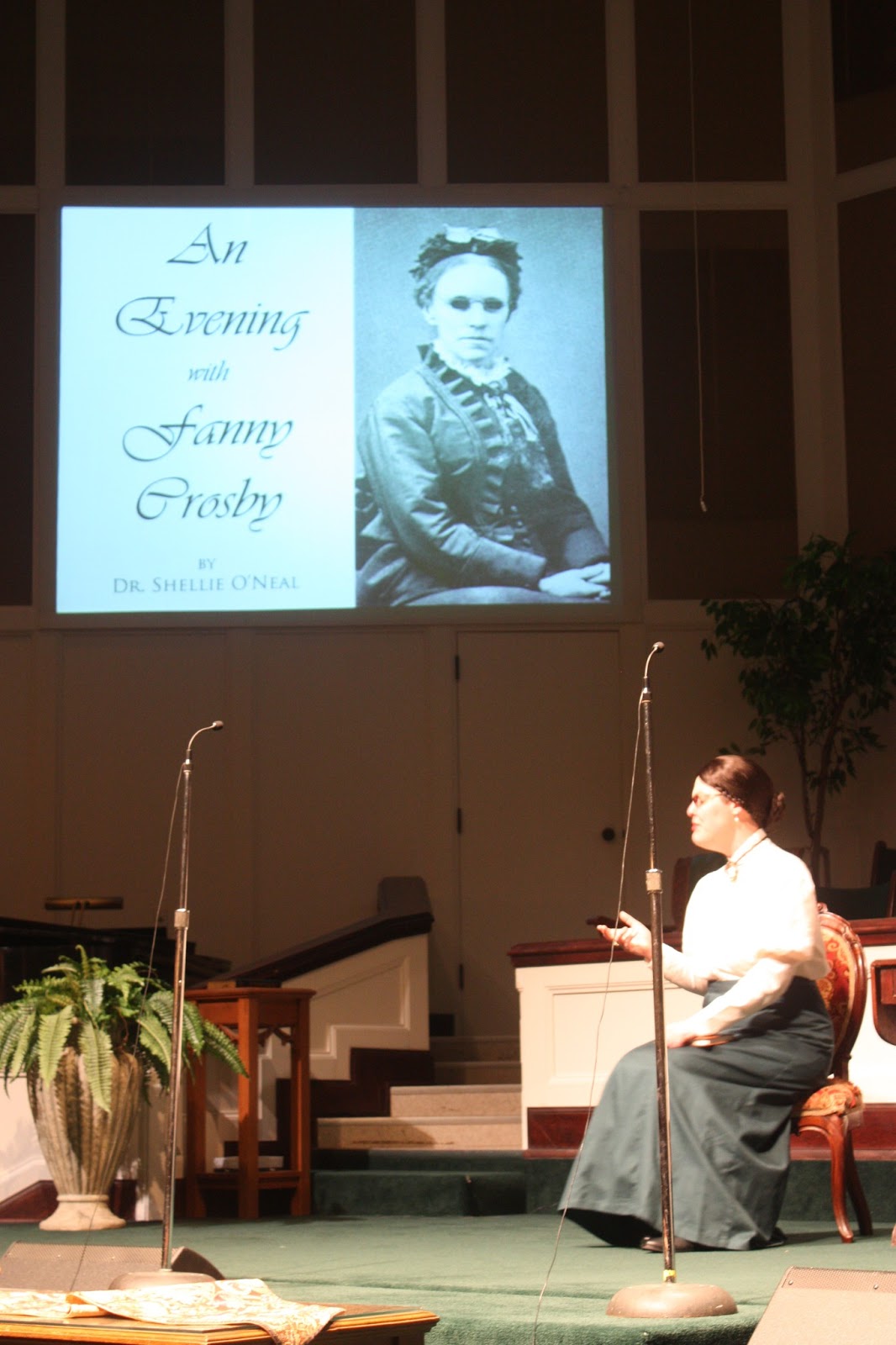
Dr. Shellie O'Neal


"Lone Star Historian" is a blog about the travels and activities of the State Historian of Texas. Bill O'Neal was appointed to a two-year term by Gov. Rick Perry on August 22, 2012, at an impressive ceremony in the State Capitol. Bill is headquartered at Panola College (www.panola.edu) in Carthage, where he has taught since 1970. For more than 20 years Bill conducted the state's first Traveling Texas History class, a three-hour credit course which featured a 2,100-mile itinerary. In 2000 he was awarded a Piper Professorship, and in 2012 he received the Lifetime Achievement Award from the Wild West Historical Association. Bill has published almost 40 books, half about Texas history subjects, and in 2007 he was named Best Living Non-Fiction Writer by True West Magazine.

Dr. Shellie O'Neal, director of he Theatre Department at Navarro College in Corsicana, has utilized her skills and training as a dramatist to create historical theater. Shellie, one of my daughters, was a faculty member at the University of Texas in Tyler when, in 2001, she was selected to revive Navarro's Theatre Department, which had been discontinued years earlier. Because her budget was limited, she began to write her own plays to avoid the royalties required for published plays. Through the years she has written, produced directed, and occasionally acted in more than 20 plays. Shellie has created comedies, romances, children's plays, and religious plays. Some of her work has a Texas setting, such as Love in Lampasas, and Bluebonnets in the Back Yard, set in Nacogdoches County. Hope in Hemphill won the Texas State Playwriting Award of the Texas Educational Theater Association. Traveling the Gnome Star State is a children's play in which a band of gnomes make their way across Texas encountering longhorns, bluebonnets, mockingbirds, and other icons of the Lone Star State.

For several years Dr. O'Neal has researched medieval cycle plays, including work in England. While cycle plays remain popular in England and Canada, there is no record of a cycle play ever having been performed in Texas. On Palm Sunday weekend, the Navarro College Theatre Department will present Clothed in Glory: A Palm Sunday Pageant, written and directed by Dr. O'Neal. Her students have constructed two medieval-style pageant wagons, and numerous costumes have been assembled. The cast is composed of Navarro students and faculty members. Within an area of a few blocks in Corsicana, four churches form a rectangle. Shellie consulted with each of the four pastors of these churches, and an appeal was made to the church choirs.

The pageant will begin at the ornate 1896 First Methodist Church, then will proceed to the nearby First Presbyterian Church, where scenes from the life of Jesus will be portrayed by 43 cast members, 34 members of the combined choir, and assorted sheep and horses. The crucifixion will be dramatized at St. John's Episcopal Church, and the resurrection scene will  take place across the street at the First Baptist Church. There has been enthusiastic support from Navarro College, the four churches, and the community, and this unique event is widely anticipated. Performances will begin at 3 PM on Saturday, March 23, and the next afternoon, Palm Sunday. 

Shellie's other major venture into historical drama is a one-woman play about Fannie J. Crosby, the blind composer of more than 8,000 hymns. Shellie approached the project with the methods of an historian. She read and noted Crosby's two autobiographies, her hymns, and her nine biographies. She conducted primary research in New York City, the site of Crosby's home life. Shellie first performed the play in November 2011, and numerous appearances since have included two performances in New York. This is My Story, This is My Song: An Evening With Fannie Crosby features several of Crosby's most beloved hymns, and Shellie will next perform as Fannie on Sunday evening, April 7, at the First Baptist Church of Graham. 

For more information: www.shellieoneal.com


Shellie in New York City


Portraying a blind woman Shellie must
be escorted onto the podium, a service
I proudly provide whenever possible.

Saturday, March 9, 2013

Boundary


"Lone Star Historian" is a blog about the travels and activities of the State Historian of Texas. Bill O'Neal was appointed to a two-year term by Gov. Rick Perry on August 22, 2012, at an impressive ceremony in the State Capitol. Bill is headquartered at Panola College (www.panola.edu) in Carthage, where he has taught since 1970. For more than 20 years Bill conducted the state's first Traveling Texas History class, a three-hour credit course which featured a 2,100-mile itinerary. In 2000 he was awarded a Piper Professorship, and in 2012 he received the Lifetime Achievement Award from the Wild West Historical Association. Bill has published almost 40 books, half about Texas history subjects, and in 2007 he was named Best Living Non-Fiction Writer by True West Magazine.

The only original boundary marker in the contiguous United States stands in southeastern Panola County. On June 1, 1840, the steamboat Albert Gallatin stopped its northbound journey up the Sabine River at Logan's Ferry (later Logansport). Passengers included a commissioner and a surveyor from the United States, and a commissioner and a surveyor from the Republic of Texas. These men were setting the border between the United States and the Republic of Texas from the Gulf of Mexico to the Red River. The southern part of the boundary was the Sabine River, but just above Logan's Ferry the river turned toward the northwest. At this turning point a meridian line was surveyed northward to the  Red River, and a granite marker was placed on the north-south meridian. One side of the marker has the letters "R.T.," while another side announced, "Meridn [sic] Boundary Established AD 1840." (A larger marker - ten feet tall - at the nearby Sabine River has been lost to erosion.) This unique historical artifact may be found in a small park on the north side of Highway 31 below the rural community of Galloway.

Pulaski, the seat of Panola District, was about 12 miles to the northeast of the boundary marker, perched on a bluff overlooking the east bank of the Sabine River. A river ferry just to the north gave birth to the log cabin village. The log structures of Pulaski were arranged in a rough triangle, and included a one-room log courthouse. When Harrison County was organized in 1839, Pulaski served as the seat of government until 1841, when Marshall was founded as county seat. Panola District became Panola County in 1846, and Pulaski was the first county seat, until Carthage was founded near the center of the county in 1848. No trace of Pulaski remains today, except the roadway and ferry site. The deserted townsite is on private property and is difficult to reach.
My oldest granddaughters, Chloe and Jessie Martinez,
accompanied me and my wife Karon on our trip through
eastern Panola County. Chloe (left) and Jessie stand
beside the marker to provide size perspective. 
Another nearby relic of  the Republic of Texas is a private cemetery located about five miles southwest of the international boundary and less than a mile inside Panola County's southern boundary. The Regulator-Moderator War was a blood feud that swept across Harrison County, Panola District, and Shelby County during the 1840s. There were almost 40 deaths, and the murderous leader of the Regulators was "Colonel" Watt Moorman. Moorman was slain with a shotgun blast, and he was buried in a family cemetery that is today bounded by four posts. A former student of mine at Panola College graciously permitted me access to this venerable cemetery.

Looking north at the Sabine River from the bluff
occupied by Pulaski. A wagon road at right went
down to the east bank and a ferry. 
Watt Moorman was buried in this
private cemetery atop a hill near
his family home,  which was
downhill to the right. Bounded
today by four posts, the little
cemetery has ten unmarked graves.

Logan's Ferry from Texas to Louisiana crossed the
Sabine River at the location of this modern traffic bridge.
In 1850 Watt Moorman took the ferry from the Texas
side to the point where I am standing with my camera.
As he stepped off the ferry Moorman was shotgunned
by an intended victim, Dr. Robert Burns.


Sunday, March 3, 2013

TSHA 2013


"Lone Star Historian" is a blog about the travels and activities of the State Historian of Texas. Bill O'Neal was appointed to a two-year term by Gov. Rick Perry on August 22, 2012, at an impressive ceremony in the State Capitol. Bill is headquartered at Panola College (www.panola.edu) in Carthage, where he has taught since 1970. For more than 20 years Bill conducted the state's first Traveling Texas History class, a three-hour credit course which featured a 2,100-mile itinerary. In 2000 he was awarded a Piper Professorship, and in 2012 he received the Lifetime Achievement Award from the Wild West Historical Association. Bill has published almost 40 books, half about Texas history subjects, and in 2007 he was named Best Living Non-Fiction Writer by True West Magazine. 

Book Exhibitors' Hall
Fort Worth was the recent site of the 117th Annual Meeting of the state's oldest scholarly organization, the Texas State Historical Association. The Worthington Renaissance Hotel, across from lively Sundance Square and one block south of the historic Tarrant County Courthouse, provided the TSHA with hospitality and spacious facilities. From Thursday through Saturday, February 28 through March 2, more than 670 attendees enjoyed a buffet of historical activities. A large number of exhibitors and benefactors provided $32,000 in sponsorships, helping the TSHA to stage program sessions and events honoring and celebrating the incomparable historical heritage of the Lone Star State. 

Dr. Gregory W. Ball. of the U.S. Air Force History
and Museums Program, is the author of They
Call Them Soldier Boys
, which was released by UNT
Press during the Annual Meeting.
Dr. Sanders Marble, of the U.S. Army Office of
Medical History. Dr. Marble and Dr. Ball were
the presenters during the Thursday session,
"New Perspectives on Texas Soldiers in WW 1."
At the Women in Texas History Luncheon
Dr. Mary Scheer was presented a
Book of the Year Award for
Women and the Texas Revolution.
There were 42 sessions, each offering two or three presentations and the latest research from an impressive gathering of scholars and authors. Other activities included a Women in Texas Luncheon, a Book Lovers' and Texana Collectors' Breakfast, an Awards Luncheon, a Graduate Student Mixer, the Presidential Banquet honoring outgoing TSHA President Watson C. Arnold, and field trips to the historical delights of Cowtown. Adding to the historical variety were sessions provided by the Texas Folklore Society, Texas Historical Commission, Texas Archaeological Society, Texas Catholic Historical Society, Texas Oral History Association, Texas Supreme Court Historical Society, and the Society of Southwest Archivists. There were several book signings with the authors of exciting new releases.


The most accomplished history professors in Texas were present, and so were successful businessmen, lawyers, doctors, librarians, dedicated public school teachers - all with a passion for Texas history and a determination to perpetuate the TSHA and other organizations devoted to the study and promotion of elements of the rich tapestry of the history of the Lone Star State. At these annual meetings it is a delight to encounter old friends and kindred spirits, and to meet new individuals who are steeped in Texas history. We left Fort Worth already looking forward to the 118th Annual Meeting in San Antonio.


For more information: www.tshaonline.org
Prolific author Chuck Parsons
presided over a Thursday
afternoon session on
Law and Order.
There were two distinguished presenters during the Law
and Order session: Fort Worth Historian Richard Selcer,
at the podium, and senior archivist of the Texas State
Archives Donaly Brice, seated.
The TSHA Education Committee met on Friday morning.


Rick Miller, author of a new biography
of Major John B. Jones, relates events
of Jones and the Rangers, while
the Major looks over his shoulder.
I was privileged to preside over a session on
Major John B. Jones. I am flanked by the presenters -
Peter B. Rose (left) and Rick Miller.

Less than one block from the convention hotel
 is the Sid Richardson Museum, featuring a superb
collection of Western art by Charles Russell
and Frederic Remington. The museum welcomed
TSHA members with free admission and a new
exhibit of Remington bronzes. Museum historian
Deborah Carl, who hosted my Traveling Texas
History students and who visited the Panola College
campus with an enlightening lecture, graciously
conducted me to the new bronzes with her
customary insightful comments.
A large crowd gathered for the Fellows Luncheon
and Presentation of Awards.
TSHA Executive Director Kent Calder
welcomes the luncheon crowd.
Dr. Randolph "Mike" Campbell,
chief historian for the TSHA.
Dr. Scott Sosebee reads Resolutions in memoriam
of 17 deceased members. Outgoing President
Watson C. Arnold, at right, would deliver a delightful
address at the President's Banquet
Friday evening.
Dr. Ty Cashion was named
a Fellow of the TSHA.
During the business meeting
which followed the Fellows
Luncheon, J.P. Bryan -
a descendant of Stephen F.
Austin - enthusiastically
informed TSHA members of
new fundraising tactics.